
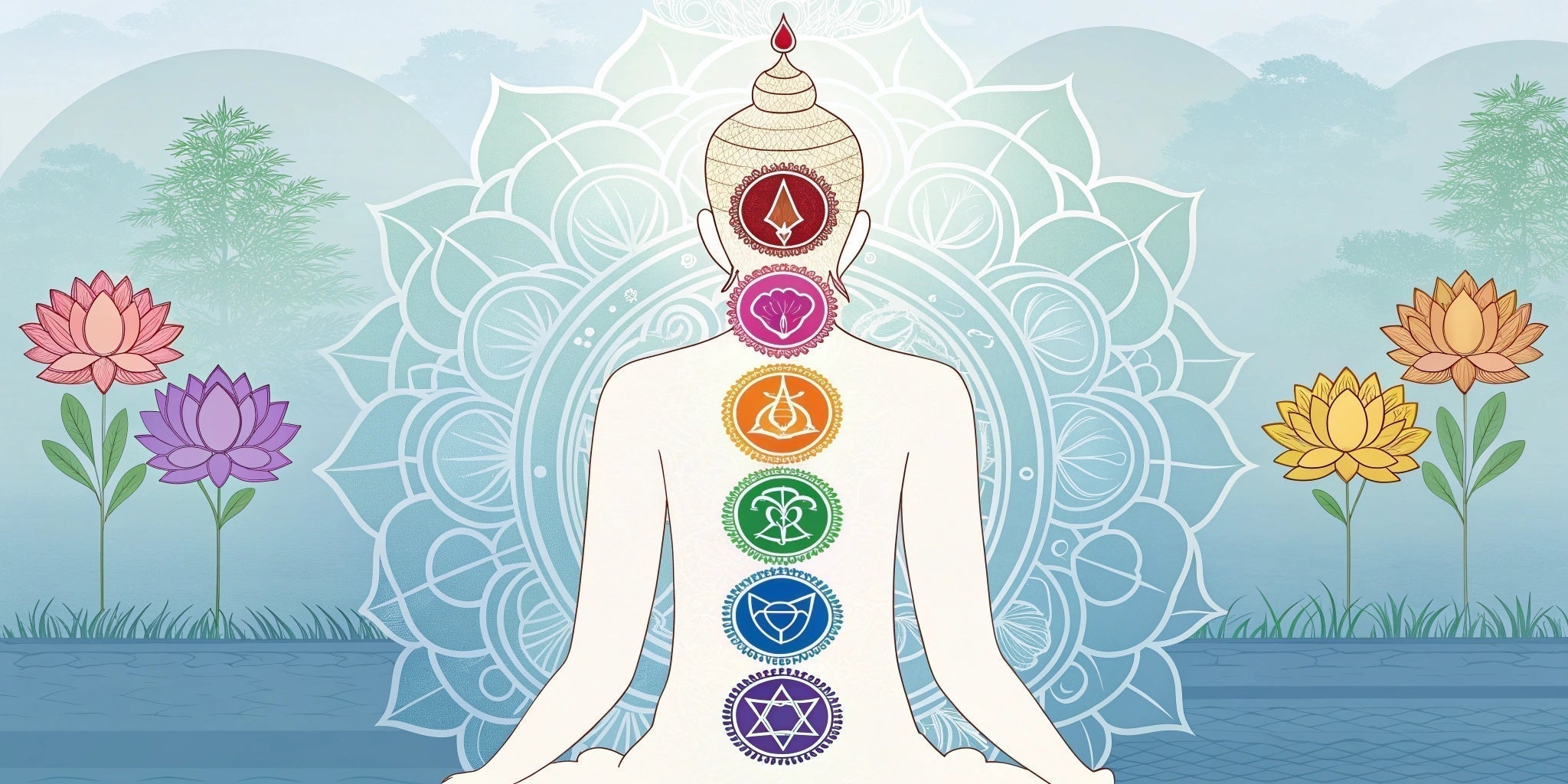
You have probably heard people talk about chakras before. Maybe in a yoga class, a meditation app, or a wellness podcast. But what are they really? What if they were invisible energy centers inside your body quietly affecting how you feel, think, and move every day? This is the idea behind chakras, a powerful concept that has guided healing and self-awareness for thousands of years.
Introduction:
A chakra is believed to be a center of energy in the body. The word chakra comes from Sanskrit and means “wheel” or “circle,” because these energy centers are often imagined as spinning wheels of energy. Chakras are often described as spinning wheels of energy, but they are actually specific energy points in the body connected to physical and emotional functions. In the Vedas, each chakra is represented with detailed symbols, showing its link to elements, sounds, and qualities that guide spiritual and energetic balance. These symbols help guide spiritual practice, but the idea of chakras spinning as visible wheels is more metaphorical than physical. Chakras are sensitive to everything we take in, whether it is physical, emotional, or energetic. This can include things like light, color, emotions, or even the energy of people we interact with. These energy centers respond to everything we take in, both physically and emotionally, and that is why they play such an important role in how we feel overall.
Overview of chakras:
There are seven main chakras in the body, and they are believed to be the most important energy centers for our physical, emotional, and spiritual well-being. These chakras are arranged in a straight line that runs from the base of the spine all the way to the top of the head. Each chakra has its own location, purpose, and even color. When the chakras are balanced, they can help a person feel healthier, happier, and more in tune with themselves. But if a chakra is out of balance, it may affect certain parts of the body, including the organs connected to that energy center.
Here's a clear and simple table of the 7 main chakras, including their name, location, color, and what they are believed to influence:
|
Chakra Name |
Location |
Color |
Focus/ What it works on |
|
Root (Muladhara) |
Base of spine |
Red |
Stability, grounding, basic survival needs |
|
Sacral (Svadhisthana) |
Just below the navel |
Orange |
Emotions, creativity, sexuality, pleasure |
|
Solar Plexus (Manipura) |
Upper abdomen/ stomach area |
Yellow |
Confidence, personal power, motivation |
|
Heart (Anahata) |
Center of the chest |
Green |
Love, connection, compassion, emotional healing |
|
Throat (Vishuddha) |
Throat |
Blue |
Communication, self expression, truth |
|
Third eye (Ajna) |
Between the eyebrows |
Indigo |
Imagination, |
|
Crown (Sahasrara) |
Top of the head |
Violet or white |
Higher consciousness, Awareness, spiritual connection |
Importance of Chakra Balance
When the chakras are out of balance, it does not just affect your mood. It can affect your body, your relationships, and your sense of purpose. You might feel anxious without knowing why, or face ongoing health issues that do not seem to have a clear cause. A blocked chakra can create tension in the body or cloud the way you think and communicate. For example, digestive issues, low back pain, difficulty speaking up, or trouble feeling connected can all be signs of energetic imbalance.
The good news is, the energy system is not fixed. With awareness and care, chakras can be supported, cleared, and brought back into balance. It starts with understanding what each chakra needs and gently creating space for that energy to move again. Balancing the chakras helps energy flow smoothly. This does not mean you will never face challenges, but it means your body and mind can respond with more ease. You may feel clearer, more present, and more aligned with what matters to you. It supports emotional stability, physical well-being, and a deeper sense of connection. Keeping your energy centers balanced is one of the ways you stay in tune with yourself. It brings the different parts of your life into better harmony.
Tips on Balancing Chakras
Balancing your chakras is not about doing everything perfectly. It’s about gently tuning into your body and making space for energy to move freely. For the root chakra, grounding activities like walking barefoot, spending time in nature, and eating root vegetables help you feel steady and supported. The deep C note of a singing bowl can also create a sense of stability and connection.
The sacral chakra comes alive through movement and creativity. Dance, paint, or spend time near water to awaken your natural sense of flow and joy. When you play a singing bowl tuned to the D note, let its sound guide you into a state of creative flow and emotional ease. This tone supports the sacral chakra, helping you reconnect with your joy, movement, and inner expression.
For the solar plexus chakra, focus on building confidence with small daily goals, getting sunlight, and eating warm yellow foods. A singing bowl tuned to the E note can strengthen your inner fire and motivation.
The heart chakra opens through acts of kindness and forgiveness. Spend time with loved ones or show compassion to yourself. Deep breathing and leafy greens help too, along with the gentle F note that supports emotional release and love.
Clear your throat chakra with honest communication. Sing, sip herbal tea, or speak your truth, and let the G note from a singing bowl help you express yourself with clarity.
The third eye chakra benefits from quiet time. Meditation, visualization, and reducing screen time sharpen inner awareness. The A note supports this chakra, inviting stillness and insight.
Finally, the crown chakra thrives on spiritual connection. Whether through prayer, silence, or reading something inspiring, give yourself moments to feel part of something bigger. A singing bowl tuned to the B note can help lift your energy upward into peace and awareness.

Here are a few simple affirmations to help balance each chakra:
Root Chakra
I am safe. I feel steady and supported, right where I am.
Sacral Chakra
I let myself feel joy. I welcome creativity and flow into my life.
Solar Plexus Chakra
I believe in myself. I’ve got the strength to move forward.
Heart Chakra
I open my heart to love and kindness, for myself and others.
Throat Chakra
I speak honestly and kindly. My voice matters.
Third Eye Chakra
I trust what I feel inside. I see things clearly.
Crown Chakra
I feel connected to something bigger. I am open and at peace.
Conclusion
At the heart of it, chakras are about understanding yourself in a deeper way. They give us a map to explore how our energy moves through the body and how it connects to our thoughts, feelings, and physical health. When our energy flows freely, life tends to feel smoother. We feel more grounded, more open, more clear. But when something feels off, our chakras often hold the clues.
Taking care of your energy is not about doing everything perfectly. It is about small moments of awareness, care, and connection. A walk in nature, a deep breath, an honest conversation, or a quiet pause can all support balance. The more you listen to your body and your inner world, the more you will start to feel when something needs attention.
Share:
What is sound therapy or healing!
Manifesting Your Desires Through Sound Frequencies