
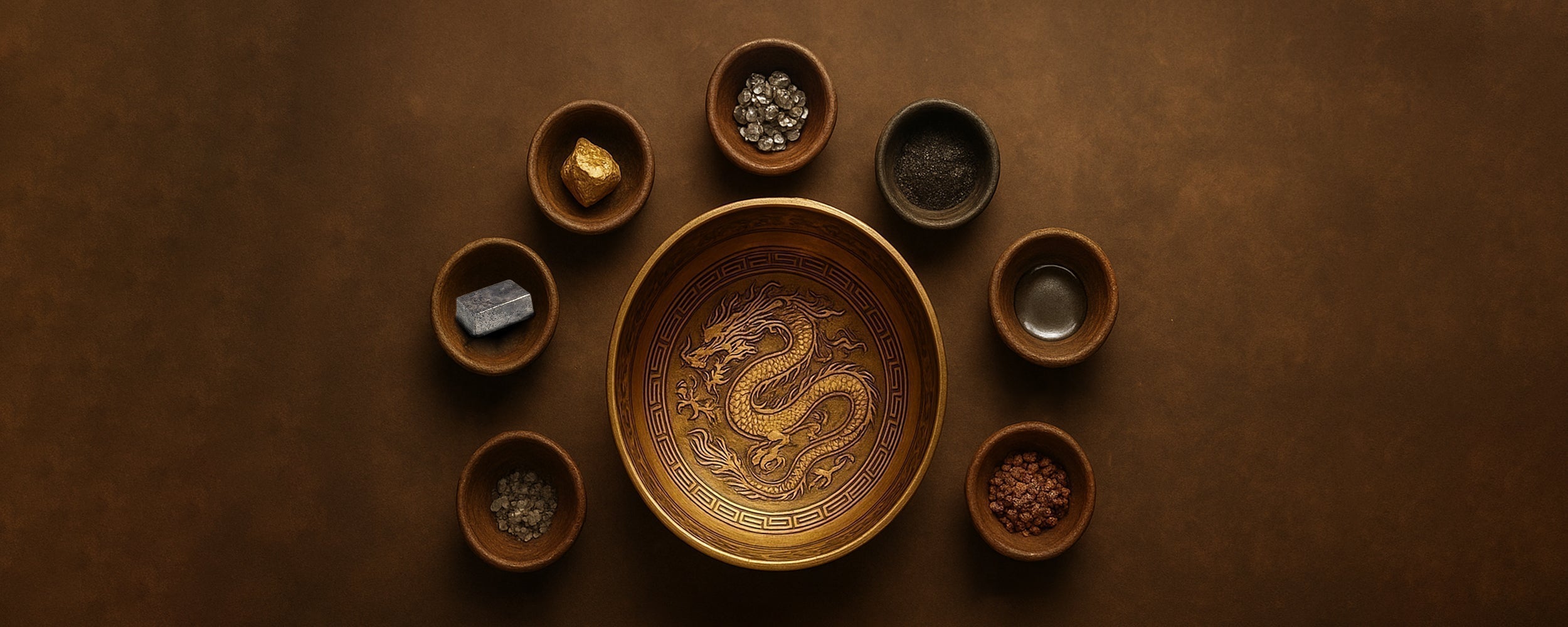
Back in school, we all studied the basic metals in our science books ; Gold, silver, copper, iron, tin, lead, and mercury. We learned their symbols, maybe memorized their melting points, and did the usual experiments. At the time, they felt like just facts we had to remember for a test. What we did not know back then was that these same seven metals have been part of something much older and more meaningful. Long before classrooms and textbooks, they were used in practices that went beyond science. One of the most interesting examples is the singing bowl.
A singing bowl is shaped not from a single metal but from a blend of seven. For centuries, artisans have shaped these bowls using a specific combination of metals. Not just for tradition, but for sound, for strength and for balance. Each metal brings something different, and together they create something that feels complete.
The idea of using seven metals in a single object is not just technical, it is deeply intentional. Traditional singing bowls are believed to contain gold, silver, mercury, copper, iron, tin, and lead. This is not just about what goes into the bowl. It is about why it matters. The use of seven metals in singing bowls is about more than just sound or craftsmanship. It comes from an old way of seeing the world as deeply connected. The body, the earth, and the sky were not seen as separate, but as parts of the same whole. In many early traditions, each of the seven metals was linked to a celestial body.
So let’s look at these seven metals:
1) Gold
In school, gold was that shiny metal that never tarnished. In Tibetan tradition, it is tied to the Sun, symbolizing vitality, clarity, and life force. In a singing bowl, even a tiny amount of gold is believed to add brightness and clarity to the tone. Physically, gold is soft and malleable, but spiritually it represents purity and wisdom. Tibetan Buddhists view gold as a way to connect with higher consciousness. When a bowl contains gold, its sound is thought to cut through mental fog and invite a sense of clear awareness.
 2) Silver
We might have seen silver wires in electronics or learned that silver is highly conductive. Spiritually, it is linked to the Moon and is thought to carry qualities of calm, reflection, and emotional balance. In a singing bowl, silver is used to soften the overall sound, producing a smoother and more peaceful tone. It also adds a gentle resonance that encourages introspection. Ancient practitioners believed that silver’s lunar energy supported meditation and inner stillness. It helped guide the mind inward, toward a place of quiet observation and balance.
 3) Copper
Back in school, we saw copper in wires during science class and maybe even noticed how it turned green when left out in the open. It was one of those everyday metals that seemed simple at first. But copper has long been linked to Venus, the planet connected with love, balance, and beauty. In singing bowls, copper is often the main metal because it is easy to shape and gives off a warm, steady sound. That warmth is not just physical — it carries a feeling too. Many believe copper helps open the heart and support compassion. When you hear a bowl rich in copper, the tone feels deep and comforting, like something gently holding you from the inside.

4) Iron
In science class, we tested magnets or saw how iron rusted in water. It felt strong, a bit rough, and always pulled your attention with its weight. Spiritually, iron has long been associated with Mars, the planet of action, strength, and protection. In singing bowls, iron adds a sense of grounding. It gives the bowl its solid weight and helps create deep and steady tones. That heaviness does more than shape the sound. It connects the vibration to the body, making it feel rooted and real. Ancient practitioners believed that iron helped strengthen focus and offered a protective energy, especially during meditation.
 5) Tin
Tin might not have stood out much when we first learned about metals. It was light, easy to melt, and often mixed with others to make something stronger. But in ancient traditions, tin was linked to Jupiter, the planet of wisdom, growth, and generosity. In singing bowls, tin helps brighten the sound and lets it linger just a little longer in the air. It adds a feeling of openness to the tone, like space unfolding. Tin’s presence in a bowl invites both clarity and expansion, the kind that feels uplifting without being overwhelming.

6) Lead
Lead was one of those metals we were told to be careful around. We learned it was toxic and needed special handling, so it always carried a sense of caution. But in ancient thought, lead was linked to Saturn, the planet that represents time, discipline, and the long path of growth. In singing bowls, only a small amount of lead was used, but it played an important role. It helped deepen the lower tones and made the sound feel more grounded and steady. That weight in the sound seemed to hold something still. Ancient practitioners saw this as a reflection of patience and quiet endurance. A bowl with lead does not rush. Its tone stays with you, like a reminder that growth often takes time and the most lasting changes happen slowly.

7) Mercury
Mercury was the metal that always felt a bit mysterious. It was the liquid silver we were warned not to touch, strange and flowing like it had a mind of its own. In ancient traditions, mercury was linked to the planet Mercury, which represented movement, communication, and change. Some singing bowls were said to include small traces of mercury, though it was used with great care because of how dangerous it could be. In other cases, its presence was more symbolic than physical, brought in through ritual or intention. The energy mercury represents is about connection. It is about how thoughts turn into words and how words can move us or others. Ancient practitioners saw it as a reminder to stay flexible and aware, to pay attention to how we express ourselves, and to move with clarity through both sound and silence.

Conclusion:
After learning how each of the seven metals holds its own meaning, it becomes clear that a singing bowl is not just about sound. It is a reflection of something larger. These metals come from the earth, but they were also seen as connected to the planets, to time, to the way we live and think. That blend of material and meaning is what makes these bowls so unique.
The next time you hear the soft ring of a singing bowl, try listening with more than just your ears. Notice how it feels in your body, how it shifts your breath or clears your mind for a moment. That is the power of something made with intention.
If you are curious to explore further, we welcome you to take a look at our singing bowls. Each one is shaped with care, using the traditional blend of all seven metals. Choose the one that feels right to you. Let it be a companion in quiet moments, a gentle reminder to pause, breathe, and return to yourself.
Share:
What is Singing Bowl?
The History of Singing bowl