
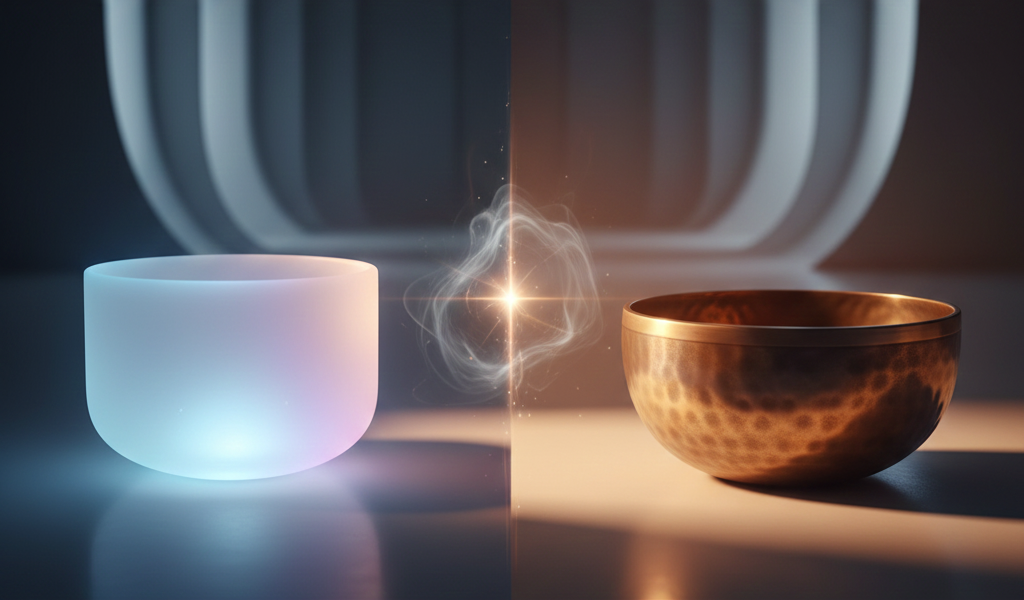
Crystal bowl vs Singing bowl: Understanding both of them
You might have seen a crystal bowl being used by Jhené Aiko in some of her live sessions, where she creates a peaceful atmosphere through healing sounds. She often blends these tones into her music to promote calmness and emotional release. You may have also come across those one-hour meditation or relaxation videos on YouTube where someone continuously plays a metal singing bowl, filling the space with deep and soothing vibrations. Both sounds can instantly shift your mood, but have you ever wondered what truly makes them different?
What are Crystal Bowls?
Crystal bowls are some of the most enchanting instruments used in modern sound healing. They are made from pure crushed quartz crystal that is heated at extremely high temperatures until it melts into shape. Once formed, the bowl gives off a soft, glowing appearance that feels both delicate and powerful. Some crystal bowls are left in their natural frosted white form, while others are infused with gemstones or color pigments that match specific chakras or healing intentions.
When played, a crystal bowl produces a pure, high-frequency sound that seems to travel through the air like light. Its vibration is clean and expansive, often felt throughout the entire body. Because quartz naturally amplifies energy, many healers believe that the sound from these bowls can cleanse energy fields, balance chakras, and raise the vibration of a space.
There is also a gentle myth surrounding crystal bowls — that they respond best to those who play them with a pure heart and calm energy. The belief is not that the bowl refuses to sing otherwise, but that the tone becomes more beautiful when played with mindfulness and good intention. In that sense, the person and the bowl become one, sharing the same frequency of peace and clarity.
Material and Craftsmanship
The most visible difference between crystal bowls and Tibetan singing bowls lies in their materials and how they look.
A crystal bowl often appears white, milky, or slightly transparent, with a smooth surface that glows softly under light. It feels delicate yet strong, almost like holding a piece of frozen light. In contrast, a Tibetan singing bowl carries an earthy, metallic appearance with shades of bronze, copper, or gold. Its surface often shows gentle hammer marks from the artisan’s hand, giving it a timeless and sacred feel.
Crystal bowls are created from pure crushed quartz crystal that is melted at high temperatures and shaped into smooth, resonant forms. The finished surface resembles glass but with greater density and strength. Because quartz can store and amplify energy, these bowls are often associated with clarity and higher vibration. Some are infused with stones such as amethyst or rose quartz to enhance specific energetic properties. Each crystal bowl is precisely tuned to a musical note linked to one of the seven chakras.
Tibetan singing bowls are made through a traditional metalworking process that uses a blend of seven sacred metals, each symbolizing a planet. Artisans in Nepal and Tibet hammer the metal by hand, shaping the bowl slowly until it produces a balanced tone. The surface is often engraved with Buddhist mantras, deities, or symbolic patterns, giving each bowl a distinct identity.
Crystal bowls embody precision and modern refinement, while Tibetan singing bowls preserve the irregular beauty and depth of ancient craftsmanship. Together they represent two different paths to sound healing—one guided by purity of frequency, the other by the resonance of tradition.
Sound and Vibration
The sound and vibration of crystal bowls and Tibetan singing bowls are very different.
Crystal bowls create a clear and high-pitched tone that spreads evenly through a space. Each bowl is tuned to a specific musical note that connects to one of the body’s chakras. The vibration feels light and smooth, often used to clear energy blocks and promote relaxation during meditation or healing sessions.
Tibetan singing bowls produce a deeper, multi-layered sound that contains several overtones. The vibration feels strong and grounding, traveling through the body and calming the mind. Because of their dense metal composition, their tone lasts longer and resonates with a warmer, earthier quality.
Crystal bowls are known for their purity and precision in sound, while Tibetan singing bowls are valued for their depth and natural resonance.
Origin and History
Crystal bowls and Tibetan singing bowls come from very different origins and timelines.
Crystal bowls are a modern development that first appeared in the 1980s. They were originally made from pure quartz crystal for use in the electronics industry, especially in the production of computer chips and laboratory equipment. It was later discovered that when these quartz bowls were played, they produced strong, clear vibrations that felt deeply soothing. This led sound healers and meditation practitioners in the West to adopt them for spiritual and therapeutic use. Over the years, crystal bowls became an essential part of sound baths, reiki, and holistic healing sessions. Today, they are widely used in yoga studios, meditation centers, and wellness retreats across the United States and Europe.
Tibetan singing bowls have a much older and more traditional background. They originated in the Himalayan regions of Nepal, Tibet, and India more than two thousand years ago. Crafted from a blend of metals, these bowls were used by Buddhist monks and spiritual practitioners for meditation, chanting, and healing rituals. Their sound was believed to help calm the mind and balance the body’s inner energy. Each bowl carried spiritual symbolism, reflecting the cosmic connection between sound and consciousness.
Crystal bowls represent the rise of modern sound healing in the West, while Tibetan singing bowls preserve the spiritual depth and craftsmanship of the ancient Himalayas.
Purpose and Use in Healing
The purpose and use of crystal bowls and Tibetan singing bowls reflect the traditions and cultures they come from.
In most traditional rituals, pujas, and monastery practices, the original metal singing bowls are still used. Monks and spiritual practitioners use them during prayers, chants, and meditation to maintain focus and balance energy within the sacred space. Their deep, grounding sound is believed to harmonize the environment and calm the mind, making them an important part of Buddhist and Vajrayana spiritual ceremonies.
Crystal bowls, on the other hand, are more commonly seen in modern wellness practices. They are often used alongside metal singing bowls in sound baths, yoga sessions, meditation circles, and wellness retreats. Their clear, high-frequency sound complements the deeper tones of the metal bowls, creating a complete range of vibration that relaxes both body and mind. In energy healing sessions, crystal bowls are also used for chakra balancing and emotional release, as their sound is said to cleanse energy fields and raise personal vibration.
While Tibetan singing bowls continue to hold sacred importance in monasteries and traditional rituals, crystal bowls have brought sound healing into contemporary wellness spaces, bridging ancient practice with modern mindfulness.
Share:
What is Tinghsa?
How Singing Bowls Help Balance the Seven Chakras