Sound has always been one of the purest forms of healing. Before medicine was written in books, it was sung, chanted, and vibrated into the body. Across ancient civilizations, sound was used to balance energy, awaken consciousness, and restore harmony between the mind and the body. Two of the oldest and most profound sound traditions in the world are the Tibetan and Vedic systems of sound healing. Both recognize that the universe itself is built on vibration and that within every vibration lies the potential for transformation.
The Science and Spirit of Sound Healing
Everything in existence vibrates. From the smallest cell to the grandest galaxy, life is built on movement, frequency, and resonance. Nikola Tesla famously stated: “If you want to find the secrets of the universe, think in terms of energy, frequency and vibration.”
Everything in the universe is in motion. From the smallest cell in our body to the vast galaxies above, everything vibrates at its own frequency. The famous inventor Nikola Tesla once said, “If you want to find the secrets of the universe, think in terms of energy, frequency, and vibration.” This simple yet powerful idea beautifully connects ancient wisdom with modern science. If everything is vibration, then healing through sound is simply the art of restoring the body’s natural harmony.
Modern research has shown that sound can influence both the mind and the body. Certain tones can shift brainwave patterns, lower stress hormones, and even help regulate the heartbeat. Vibrations produced by singing bowls or mantras help the body to relax deeply, encouraging natural healing responses. Scientific studies on mantra chanting have found that rhythmic repetition can improve focus, reduce anxiety, and support emotional balance.
Long before science began studying these effects, Vedic yogis had already understood them through experience. Practitioners of Sanatan Dharma explored the relationship between sound and consciousness through Nāda Yoga, also known as the Yoga of Sound. They believed that the universe itself was born from vibration, and that every living being carries a subtle sound within. Through deep listening and chanting sacred syllables such as Om, yogis tuned their inner vibration to the rhythm of the cosmos.
In their view, sound was not only a tool for meditation but also a way to cleanse the mind, awaken energy centers, and connect with divine consciousness. This practice still lives on today, reminding us that sound healing is both a science and a spiritual path — one that brings the body, mind, and soul into perfect resonance.
Healing Through Tibetan Sound Traditions
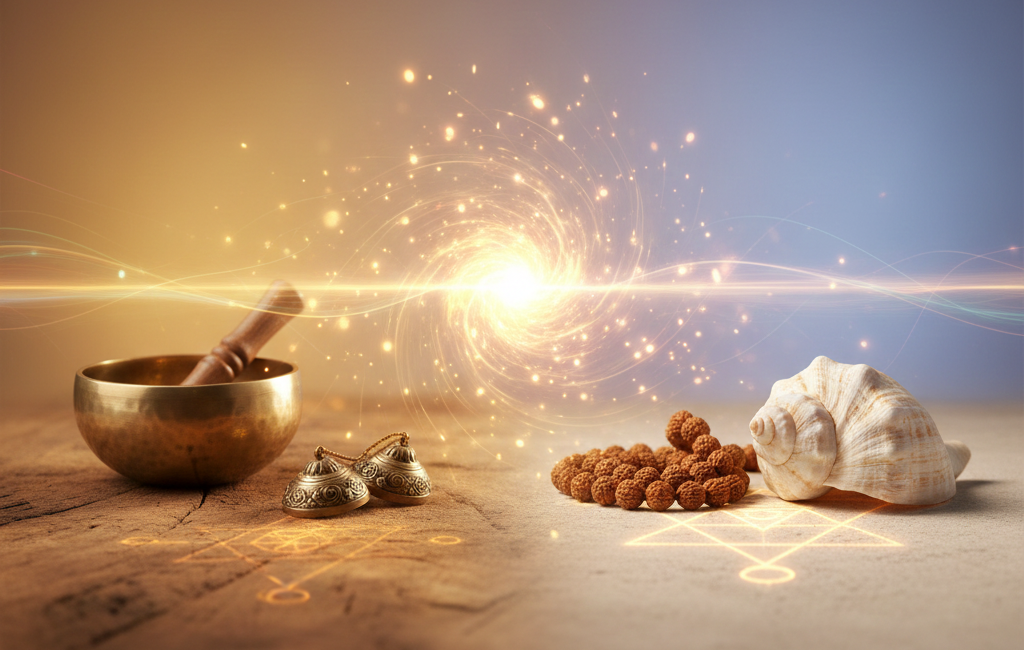
In Tibetan culture, sound is deeply woven into both daily life and spiritual practice. It is believed that the right vibration can purify the mind, release emotional heaviness, and guide the soul toward peace. Tibetan sound healing often uses singing bowls, bells, and tingsha cymbals, each producing unique tones that clear energy and calm the body. The deep resonance of the singing bowl helps balance chakras and soothe the nervous system, while the sharp clarity of the tingsha awakens focus and purifies space. Tibetan monks also chant sacred mantras during meditation and rituals, such as Om Mani Padme Hum for compassion and Om Tare Tuttare Ture Soha for Green Tara, the goddess of protection and swift healing. Each mantra carries its own vibration that aligns with specific energies and deities. Even during funerals and ceremonies, certain instruments and chants are used to guide the departed soul peacefully through its journey, symbolizing that sound not only heals the living but also blesses the soul beyond the physical body. In Tibetan philosophy, every sound is sacred because it has the power to awaken consciousness and restore balance between the inner and outer worlds.
Healing Through Vedic Sound Traditions
In the Vedic tradition of ancient India, sound is seen as the essence of creation and a direct path to spiritual awakening. The yogis of Sanātana Dharma understood that vibration is life itself, and by aligning with pure sound, one can heal the body and awaken the spirit. Through the practice of Nāda Yoga, or the Yoga of Sound, practitioners explore both external sound and inner silence, seeking unity with the divine vibration that sustains all existence. Chanting sacred mantras such as Om, the Gayatri Mantra, or the Mahamrityunjaya Mantra creates powerful frequencies that cleanse the mind, strengthen the life force, and activate the chakras. In Vedic rituals, sound also plays a central role during life transitions, including birth and death. Priests chant specific mantras and use instruments like conch shells, bells, and drums to purify the space and guide the soul’s passage. Ancient ragas and chants were also used to harmonize the body with the rhythms of nature, balancing the doshas and calming the mind. For the Vedic sages, sound was more than an art; it was a sacred science that connected the physical, mental, and spiritual realms through vibration.
Conclusion
Both Tibetan and Vedic sound traditions carry the timeless truth that everything in the universe vibrates. Healing begins when our inner rhythm finds harmony with the greater rhythm of life. Whether it is the serene hum of a singing bowl in a Himalayan monastery or the ancient echo of a Vedic mantra in a temple, these sounds awaken something deep within us. They realign energy, balance the chakras, and create a sense of peace that transcends words. Sound healing reminds us that true wellness is not only about treating the body but also about nurturing the soul. When we open ourselves to sacred sound, we begin to listen not just with our ears but with our entire being, and in that listening, healing naturally unfolds.
Share:
How Singing Bowls Help Balance the Seven Chakras
The Heart of Thangka: Symbolism in Thangka Art Explained