
Have You Ever Wished You Could Slow Down for a Moment?
It's the end of a long day.
Your schedule has been packed, notifications haven't stopped, and your mind is still jumping from one thought to another. Even when you finally sit down, it can feel difficult to fully switch off and enjoy a moment of peace.
Now imagine hearing a single, gentle tone.
A warm, resonant sound fills the room and lingers in the air. As the vibration slowly fades, your attention naturally shifts away from the noise of daily life and toward the present moment.
This simple experience is why singing bowls have been used for centuries in meditation, mindfulness, and spiritual practices throughout the Himalayan region.
Today, people around the world use singing bowls to create moments of calm, focus, and reflection in their daily routines.
But what exactly is a singing bowl, and why do so many people find its sound so captivating?
Let's explore.
What Is a Singing Bowl?
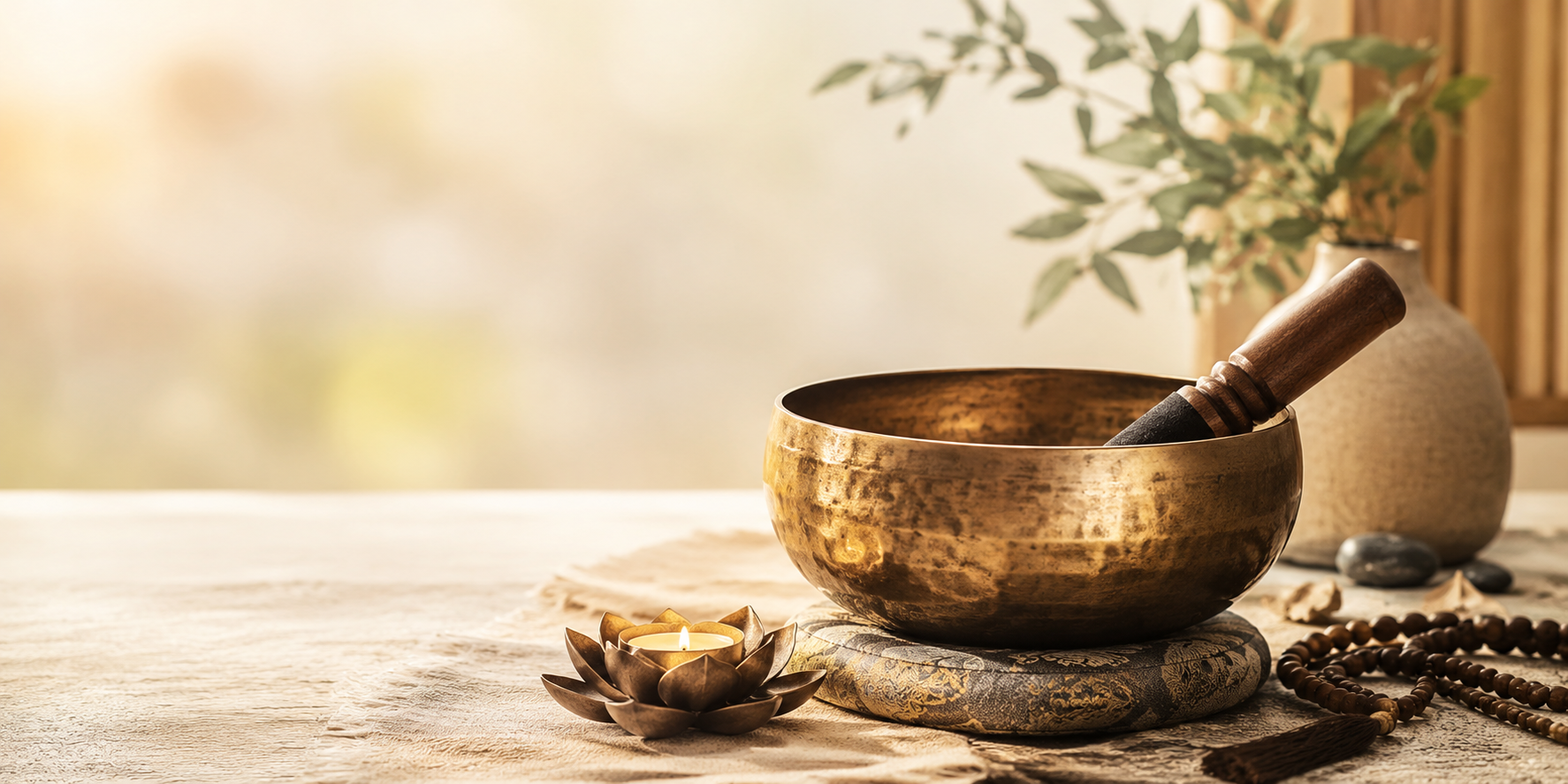
A singing bowl is a handcrafted metal or crystal bowl that produces rich, resonant sounds when gently struck or played with a mallet.
Originating in the Himalayan region, particularly Nepal, singing bowls have long been used during meditation, yoga, prayer, and mindfulness practices.
Unlike many musical instruments, singing bowls create layers of sound known as harmonics or overtones. These sounds can be heard and felt, creating a unique sensory experience that many people find deeply relaxing.
Whether used during meditation or simply as part of a daily self-care ritual, singing bowls offer a simple way to introduce moments of stillness into a busy day.
Why Are Singing Bowls So Popular?
In today's fast-paced world, many people are looking for ways to slow down and reconnect with the present moment.
Singing bowls are popular because they help create an environment that encourages:
- Mindfulness
- Relaxation
- Focus
- Meditation
- Reflection
- Intentional self-care
The sustained sound of a singing bowl naturally draws attention to the present moment, making it easier to pause and appreciate a few minutes of quiet.
The Unique Sound of a Singing Bowl
One of the most fascinating things about singing bowls is that every bowl has its own voice.
No two bowls sound exactly alike. Each bowl produces a combination of:
- A primary tone
- Harmonic overtones
- Gentle vibrations
- Long-lasting resonance
These elements work together to create the immersive sound experience singing bowls are known for. Many people describe the sound as:
- Warm
- Grounding
- Peaceful
- Balanced
- Soothing
Why Do Different Singing Bowls Sound Different?
Several factors influence the sound of a singing bowl.
Size
Generally:
- Larger bowls create deeper, fuller tones.
- Smaller bowls produce brighter, higher-pitched sounds.
Many people enjoy larger bowls for their rich resonance, while others prefer the clarity of smaller bowls.
Material
Traditional Himalayan singing bowls are handcrafted from metal alloys, while crystal singing bowls are made from quartz crystal.
Metal Singing Bowls
Often produce:
- Rich harmonics
- Warm tones
- Complex layers of sound
Crystal Singing Bowls
Often produce:
- Clear tones
- Bright resonance
- Pure sound quality
Each offers a unique listening experience.
Shape and Craftsmanship
The shape, thickness, and craftsmanship of a bowl all contribute to its sound.
This is one reason handcrafted singing bowls are so highly valued—each bowl develops its own unique character and resonance.
Understanding Singing Bowl Notes
Many singing bowls are tuned to specific musical notes.
Each note carries its own unique sound quality and character.
Common notes include:
|
Note |
Common Traditional Association |
|
C |
Grounding and stability |
|
D |
Creativity and flow |
|
E |
Confidence and empowerment |
|
F |
Compassion and openness |
|
G |
Communication and expression |
|
A |
Awareness and intuition |
|
B |
Reflection and spiritual connection |
These associations come from traditional sound and meditation practices and are often used as a guide when selecting a bowl.
Understanding Singing Bowl Frequencies
Every sound vibrates at a certain frequency, measured in Hertz (Hz).
Lower frequencies generally produce:
- Deeper sounds
- Fuller resonance
- Grounding tones
Higher frequencies generally produce:
- Brighter sounds
- Lighter resonance
- Clearer tones
Most singing bowls produce multiple frequencies at the same time, creating the rich soundscape that makes them so distinctive.
How to Use a Singing Bowl
One of the best things about singing bowls is how easy they are to use.
Method 1: Mindful Listening
- Sit comfortably.
- Gently strike the bowl.
- Close your eyes.
- Listen carefully as the sound fades.
Even a few minutes can become a meaningful mindfulness practice.
Method 2: Circular Playing
This is the traditional singing bowl technique.
- Hold the mallet against the rim.
- Apply gentle pressure.
- Move the mallet around the edge in a slow, steady motion.
As the vibration builds, the bowl begins to sing with a continuous tone.
Method 3: Meditation Practice
Many people use singing bowls to begin or end meditation sessions.
The sound can serve as a reminder to pause, breathe, and bring attention back to the present moment.
Method 4: Yoga and Wellness Rituals
Singing bowls are often incorporated into:
- Yoga sessions
- Breathwork practices
- Mindfulness routines
- Personal wellness rituals
- Reflection and journaling sessions
Their sound helps create a peaceful atmosphere that enhances the overall experience.
Choosing the Right Singing Bowl
If you're new to singing bowls, consider the following:
Listen First
Choose a bowl whose sound resonates with you personally.
Consider the Size
Medium-sized bowls are often a great starting point because they offer a balanced tone and are easy to play.
Focus on Craftsmanship
Handcrafted bowls often provide unique sound characteristics and lasting quality.
Trust Your Experience
The best singing bowl is often the one whose sound you genuinely enjoy hearing.
Frequently Asked Questions
Are Singing Bowls Good for Beginners?
Absolutely.
Singing bowls are simple to use and can be enjoyed by anyone, regardless of experience.
How Long Should I Use a Singing Bowl?
Many people enjoy using a singing bowl for 5–15 minutes as part of their daily mindfulness or meditation routine.
Are Crystal Bowls Better Than Metal Bowls?
Both offer unique sound experiences.
Metal bowls are known for rich harmonics, while crystal bowls are often appreciated for their clear, pure tones.
Can Singing Bowls Be Used Every Day?
Yes.
Many people incorporate singing bowls into their daily meditation, yoga, or mindfulness practices.
Final Thoughts
In a world filled with constant activity and distractions, finding moments of stillness can feel increasingly valuable.
A singing bowl offers a simple invitation to pause.
Its resonant tones, gentle vibrations, and timeless craftsmanship have made it a cherished tool for meditation, mindfulness, and personal wellness practices for generations.
Whether you're beginning a meditation journey, enhancing your yoga practice, or simply looking to create a more peaceful atmosphere at home, a singing bowl can become a meaningful part of your daily ritual.
Sometimes, all it takes is a single note to bring your attention back to the present moment.
Share:
The Heart of Thangka: Symbolism in Thangka Art Explained