

How to Use and Care for Your Singing Bowl
A singing bowl is simple to play and easy to look after once you know a few basics. This guide comes from the artisans who hand-hammer and tune our bowls in our workshop. It covers how to play a singing bowl, how to clean it, and how to keep its tone clear for years. If you haven't chosen your bowl yet, our Bowl Finder will help you find the right size and sound.
Bowl resting on your open palm, or on a ring cushion
Lifts dust, fingerprints and skin oils before they mark
No abrasive pads, no bathrooms, no long hours in sun
How to Play a Singing Bowl
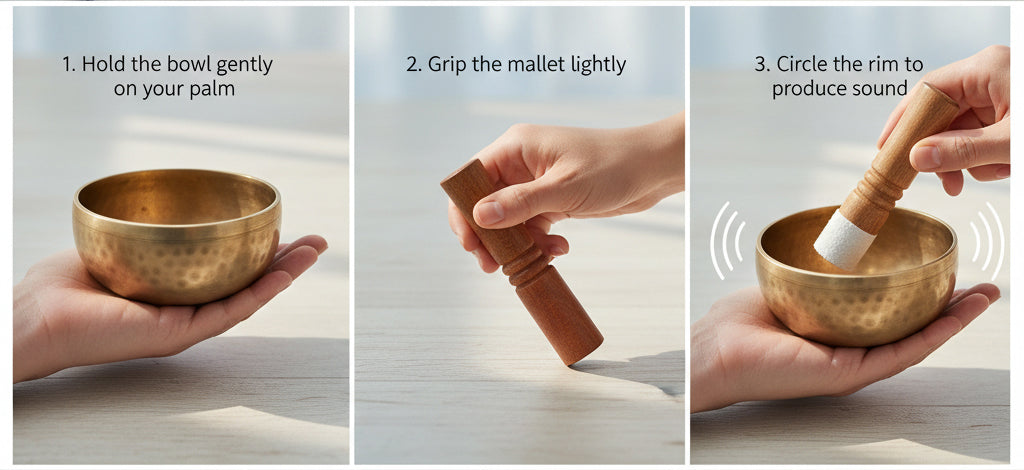
There are two ways to play a singing bowl: striking it like a bell, or rimming it, circling the mallet around the edge until the bowl sings with a continuous tone. Most people start by striking, then move on to rimming once they're comfortable.
Choose a Quiet Space
Find a calm spot where you can sit comfortably and hear the full sound. A quiet room makes it easier to notice the long, fading overtones that make each handmade bowl unique.
Rest the Singing Bowl on Your Palm or a Cushion
Place the bowl on your flat, open palm, or set it on a ring cushion. Keep your fingers away from the walls of the bowl, because touching the sides mutes the vibration. Smaller bowls sit well in the hand; larger bowls sound best on a cushion.
Hold the Mallet Like a Pen
Hold the mallet upright, like a pen, with a firm but relaxed grip. The bare wooden side gives a brighter, clearer tone and makes rimming easier. A suede or felt-covered side gives a softer, warmer sound and is ideal for striking.
Strike the Singing Bowl Gently
Tap the outer wall of the bowl, just below the rim, with the padded end of the mallet. Let the sound ring out fully before you strike again. A gentle tap produces a richer tone than a hard hit.
Rim the Singing Bowl to Make It Sing
Strike the bowl once to start it resonating. Then press the mallet against the outside of the rim and circle it slowly and steadily, keeping even pressure all the way around. After a few rotations, the vibration builds into a continuous singing tone. If you hear rattling or buzzing, slow down and press a little firmer.
Listen and Breathe
As the bowl sings, close your eyes and follow the sound as it fades. Matching slow, deep breaths to the tone is a simple way to settle into meditation or end a busy day.
Common Uses for a Singing Bowl
How to Clean and Care for Your Singing Bowl
Our singing bowls are made from a traditional bronze blend of copper and tin, shaped and tuned entirely by hand. With a little regular care, your bowl will keep its sound and character for generations.
Everyday Cleaning
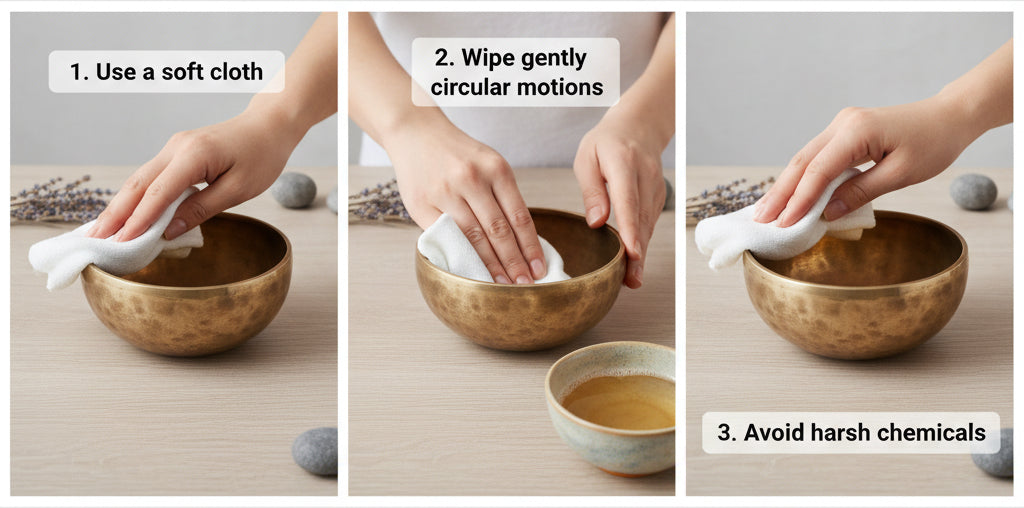
After playing, wipe the bowl with a soft, dry cloth to remove dust, fingerprints and skin oils. Oils left on the metal are the most common cause of dark marks over time.
Deep Cleaning, Monthly or as Needed
- Dampen a soft cloth with warm water and a drop of mild soap.
- Wipe the inside and outside gently. Never use abrasive pads or harsh chemicals.
- Wipe again with a cloth dampened in clean water.
- Dry the bowl completely straight away, including the base, to prevent water spots and tarnish.
Avoid Moisture and Direct Sunlight
Keep your bowl away from damp rooms such as bathrooms, and out of strong direct sunlight for long periods. Humidity speeds up tarnishing, and heat can dry out the cushion and mallet.
How to Store Your Singing Bowl
Store the bowl on its cushion or in a padded carry case to protect it from scratches and knocks. If you keep several bowls together, place a soft cloth between them rather than stacking metal directly on metal.
Energy Cleansing
Many practitioners like to cleanse their bowl now and then, especially after sound healing sessions. A common way is to play it under sunlight or moonlight, or simply to ring it a few times with a clear intention to reset its energy.
Bringing Back the Shine
If a newer bowl starts to look dull, a small amount of metal polish on a soft cloth can restore its glow. Test on a small area of the base first, use it sparingly, and wipe away all residue afterwards.
Never polish antique or semi-antique bowls. Their aged patina is part of their character, history and value, and polishing removes it permanently. A dry cloth is all an antique bowl needs.
Ready to find your sound?
Each bowl is hammered and tuned by hand in Kathmandu. Have a question we didn't answer? Write to us — we're always happy to help.